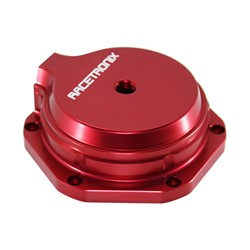
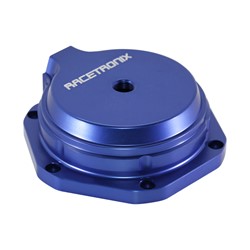
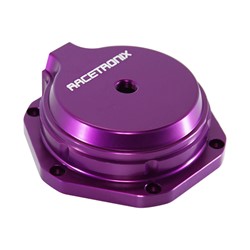
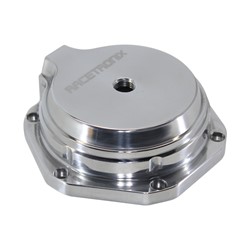
Wastegate, 44mm, Black Top
Quick Overview
- 44mm V-band wastegate, Black top
- 4.17" tall, 3 lower + 2 top air ports
- Inconel valve, Nitronic 60 guide and seat
- 304SS flanges, clamps and valve seat included
- WGMS-381 + WGMS-473 springs installed
Show More
$300.60
$334.00
per EACH (USD)WG-44-0
Wastegate, 44mm, Black Top
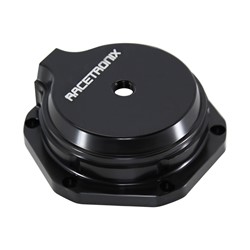
44 mm V-band external wastegate with a black anodized billet top, compact 4.17" tall. Flanges, clamps and valve seat included.

The Racetronix WG-44-0 is a 44 mm external wastegate for turbocharged engines. It controls boost by bypassing exhaust gas around the turbine. The valve is Inconel, the valve guide and seat are Nitronic 60 and the lower housing is 347 stainless steel: alloys chosen for heat, wear and galling resistance, so the valve does not stick. The actuator top is CNC machined from 6061-T6 billet aluminum, anodized black. A fibrous boron silicone diaphragm and O-ring seal handle the heat, and 17-7 PH stainless springs hold their rate when hot.
Key features
- 44 mm valve, 4.17" tall.
- 3 lower and 2 top M10x1.0 air ports, so the actuator never needs turning to reach a port. Plugs included.
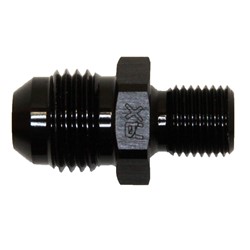
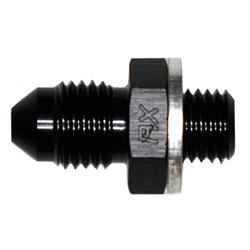
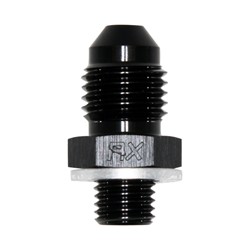
- Water cooling ports (M8x1.0), with -4 AN JIC male titanium fittings.
- 304 stainless V-band flanges and clamps for inlet and outlet, included. Flanges are chamfered and counterbored for welding.
- Inconel valve with a coated stem, Nitronic 60 guide and seat, 347 stainless housing.
How a wastegate works
Inside the wastegate, springs hold the valve shut so all the exhaust drives the turbine. Four forces decide when it opens:
- Springs push the valve shut.
- Boost on the lower port pushes up under the diaphragm. When it beats the springs, the valve lifts, some exhaust bypasses the turbine, and boost stops rising.
- Exhaust back pressure pushes up on the valve face and helps it open. At high boost it can open the valve too early, so boost falls off or will not build.
- Pressure on the top port (optional) pushes down with the springs and holds the valve shut to a higher boost. Electronic boost controllers and CO2 or air bottle systems use this.
Where you take the boost signal matters:
- Turbo outlet, before the intercooler (best). The highest and fastest signal, so the gate reacts quickly and boost stays steady. The engine sees a little less boost because of the intercooler pressure drop.
- After the intercooler, before the throttle (OK). Closer to the boost the engine sees. The signal is a little lower, so the gate opens later and boost runs higher than from the turbo outlet.
- Intake manifold, after the throttle (avoid). It sees vacuum at idle and cruise and changes with throttle position. A wastegate needs a boost-only source.
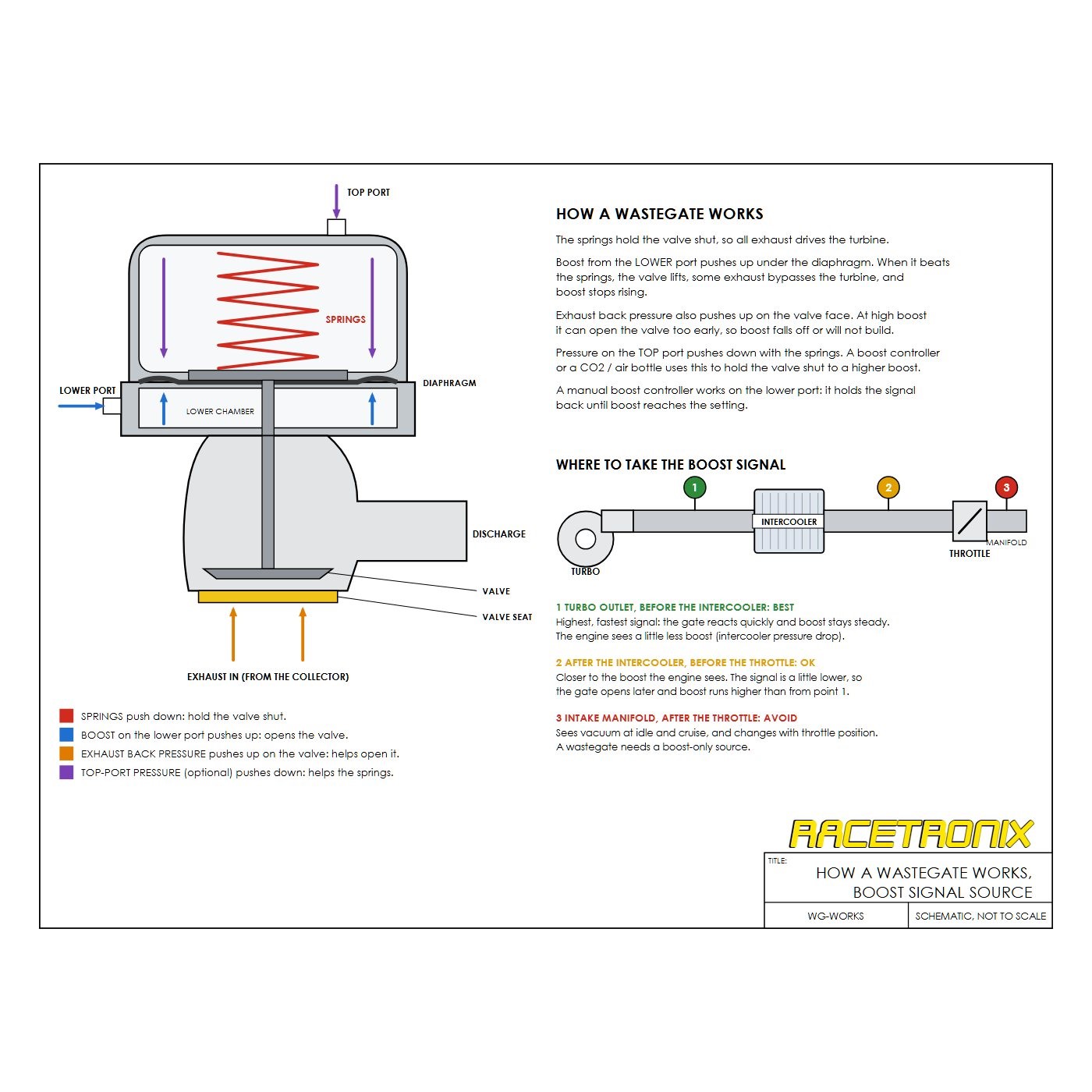
Click the drawing to enlarge. Schematic, not to scale.
Port guide
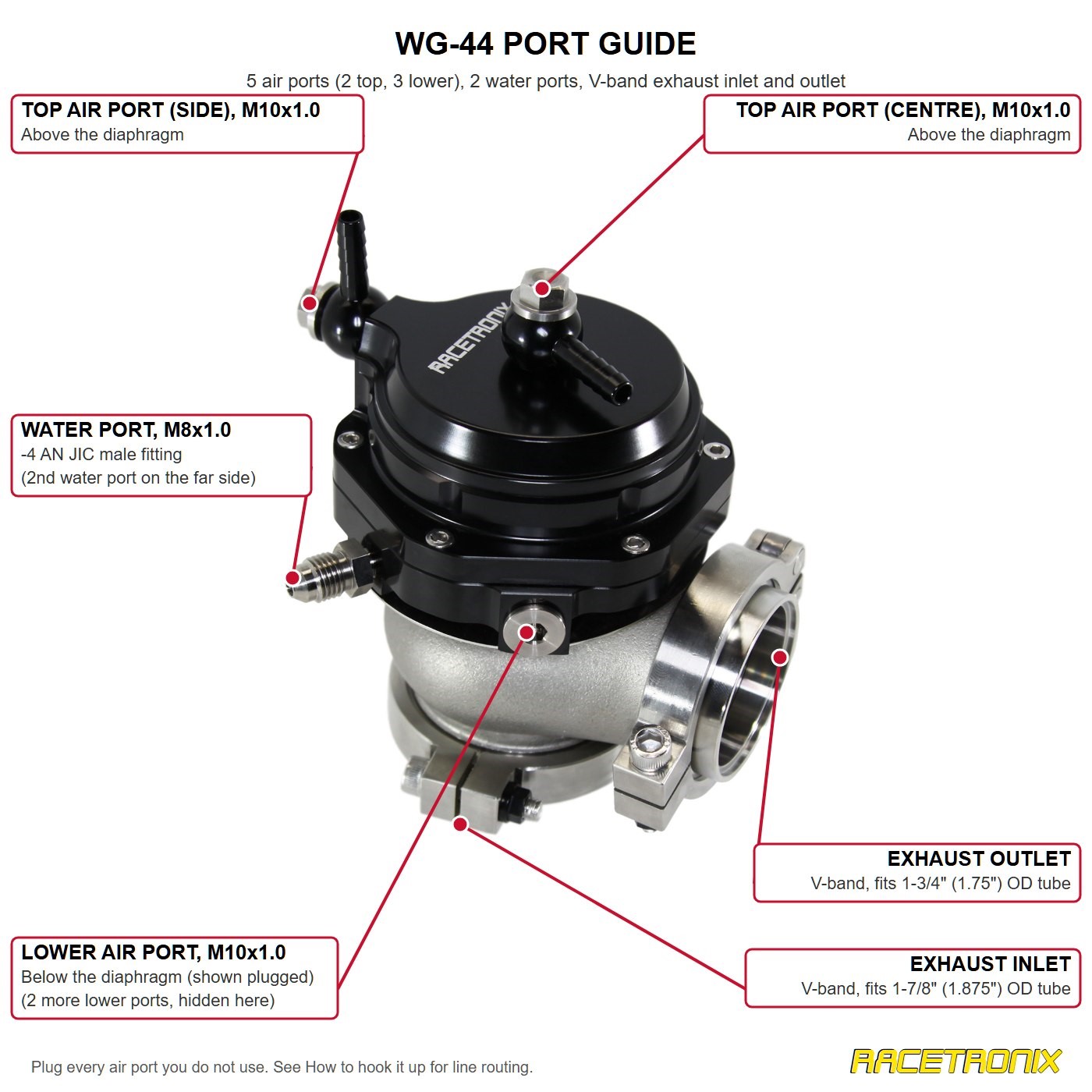
Click the drawing to enlarge. Two top air ports, three lower air ports (M10x1.0), two water ports (M8x1.0), V-band exhaust inlet and outlet.
How to hook it up
Take the boost signal from a boost-only source, ideally the turbo outlet before the intercooler (see How a wastegate works). Use 1/4" ID line or larger.
- Spring pressure only. Run the boost line to one lower port. Leave the top ports open to air. Plug the other lower ports.
- Manual boost controller. Run the boost line to the controller inlet, and the controller outlet to one lower port. Leave the top ports open. Plug the other lower ports.
- Electronic boost controller. Follow the controller maker's instructions. In a dual-port setup, one lower port gets direct boost and the solenoid feeds the top port. Plug every port you do not use.
- CO2 or air bottle on the top port. Regulated bottle pressure, switched by the controller, goes to the top port and helps the springs hold the valve shut at high boost. The lower port gets direct boost. Keep top-port pressure at 60 psi or less (recommended maximum) and follow the controller maker's instructions.
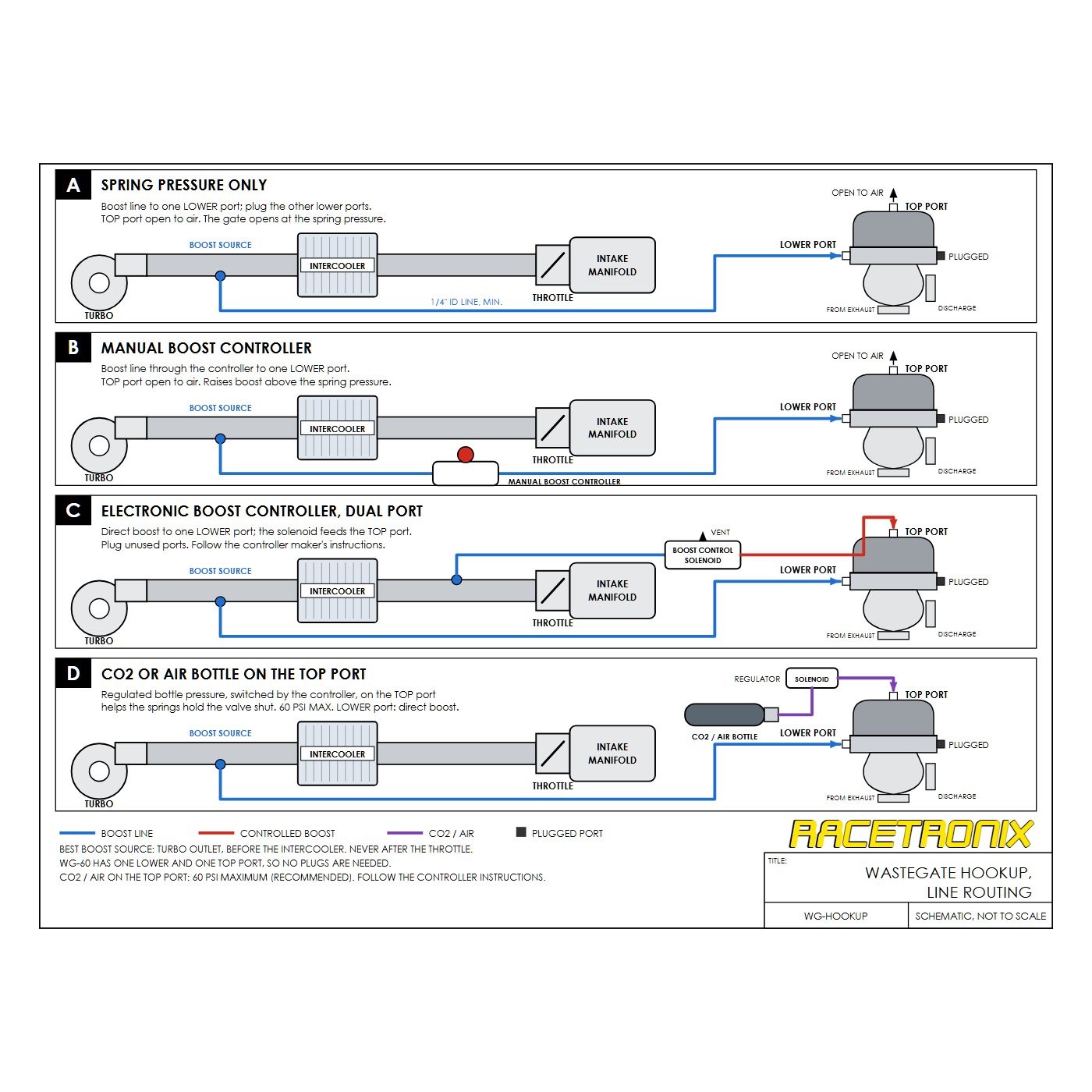
Click the drawing to enlarge. Schematic, not to scale.
Mounting and installation
- Mount the wastegate as close to the collector as possible, where every cylinder feeds it.
- Angle the inlet with the exhaust flow: the turn into the wastegate should be 90 degrees or less.
- Weld the inlet flange to the collector. Fit the valve seat between the flange and the wastegate inlet, then fit the inlet V-band clamp.
- Weld the outlet flange to the discharge pipe and clamp it on. Route the discharge to its own pipe or back into the downpipe after the turbine.
- Water cooling (optional): connect the two M8x1.0 water ports with the -4 AN JIC male titanium fittings supplied. A small coolant flow through the actuator top keeps it cool. It is not needed on a typical street car, but it helps for road racing, low engine bay airflow, rotary engines, or an actuator close to hot exhaust parts. It uses little coolant.
- Plumb the air ports (see How to hook it up), then check every line and clamp for leaks.
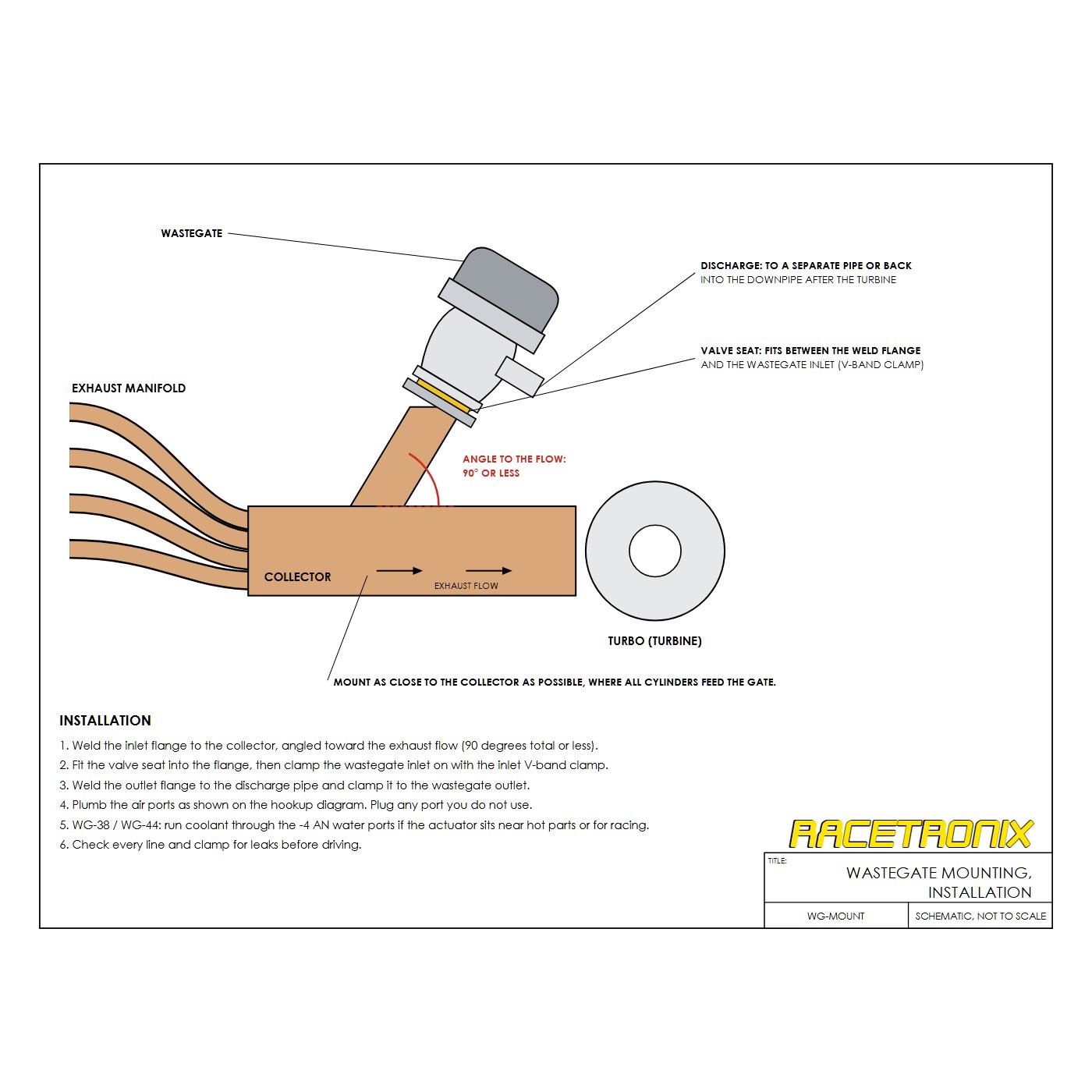
Click the drawing to enlarge. Schematic, not to scale.
Spring chart: WG-44
Two springs come installed: WGMS-381 and WGMS-473. Other springs are sold separately. Click a column heading to sort.
| Spring | Colour | Spring OD | Bar | PSI |
|---|---|---|---|---|
| WGIS-287 | Green | 28.7 mm | 0.20 | 2.90 |
| WGIS-293 | Yellow | 29.3 mm | 0.34 | 4.90 |
| WGMS-373 | Red | 37.3 mm | 0.26 | 3.80 |
| WGMS-381 | Blue | 38.1 mm | 0.38 | 5.45 |
| WGMS-475 | White | 47.5 mm | 0.35 | 5.00 |
| WGMS-473 | Black | 47.3 mm | 0.43 | 6.20 |
| WGOS-608 | Brown | 60.8 mm | 0.77 | 11.20 |
With a boost controller, start with springs rated at about half to two thirds of your target boost and let the controller raise it. Without a controller, choose springs for the boost you want. Exhaust back pressure moves the real opening point, so check boost on the car.
What's in the box
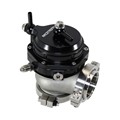 WG-44 wastegate assembly
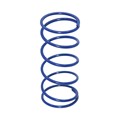 Spring WGMS-381, installed
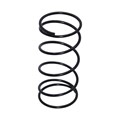 Spring WGMS-473, installed
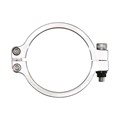 Inlet V-band clamp WG-IVBA44
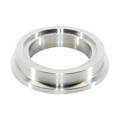 Inlet weld flange WG-WIF44
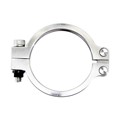 Outlet V-band clamp WG-EVBA44
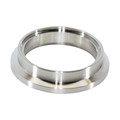 Outlet weld flange WG-WEF44
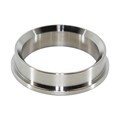 Valve seat WG-IVS44
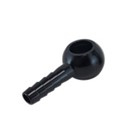 Two M10x1.0 banjo hose-barb air fittings, 6061-T6 aluminum, black anodized
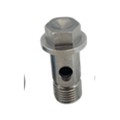 Two M10x1.0 banjo bolts, 303 stainless steel
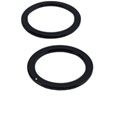 Seven M10 aluminum crush washers, black, 13.8 x 10.4 x 0.9 mm, for the banjo fittings and plugs
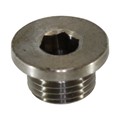 Three M10x1.0 titanium plugs for unused air ports WG-BOP-M101
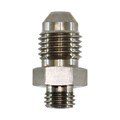 Two -4 AN JIC male to M8x1.0 titanium water fittings WG-WFIT
- Two M8 aluminum crush washers, 11.7 x 8.7 x 0.8 mm, for the water fittings
Compatible fittings
The air ports are M10x1.0 and the water ports are M8x1.0. Seal each fitting with an aluminum crush washer: M10 for the air ports, M8 for the water ports.
| Part | Fitting | Port | |
|---|---|---|---|
| Supplied | Banjo hose-barb air fitting with banjo bolt (two supplied) | Air, M10x1.0 |
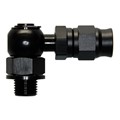 | FIT-P3B101M | -3 AN PTFE banjo hose end (use the supplied banjo bolt) | Air, M10x1.0 |
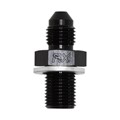 | ADF-3J1010M | -3 AN JIC male to M10x1.0 male adapter | Air, M10x1.0 |
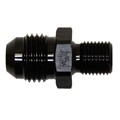 | ADF-4J1010M | -4 AN JIC male to M10x1.0 male adapter | Air, M10x1.0 |
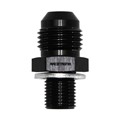 | ADF-6J1010M | -6 AN JIC male to M10x1.0 male adapter | Air, M10x1.0 |
| WG-BOP-M101 | M10x1.0 titanium plug for unused air ports (three supplied) | Air, M10x1.0 |
| WG-WFIT | -4 AN JIC male to M8x1.0 titanium water fitting (two supplied) | Water, M8x1.0 |
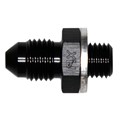 | ADF-3J810M | -3 AN JIC male to M8x1.0 male adapter | Water, M8x1.0 |
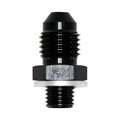 | ADF-4J810M | -4 AN JIC male to M8x1.0 male adapter | Water, M8x1.0 |
Top colours
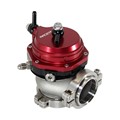
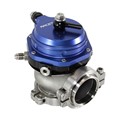
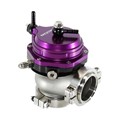
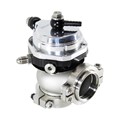
Tech drawing/schematic
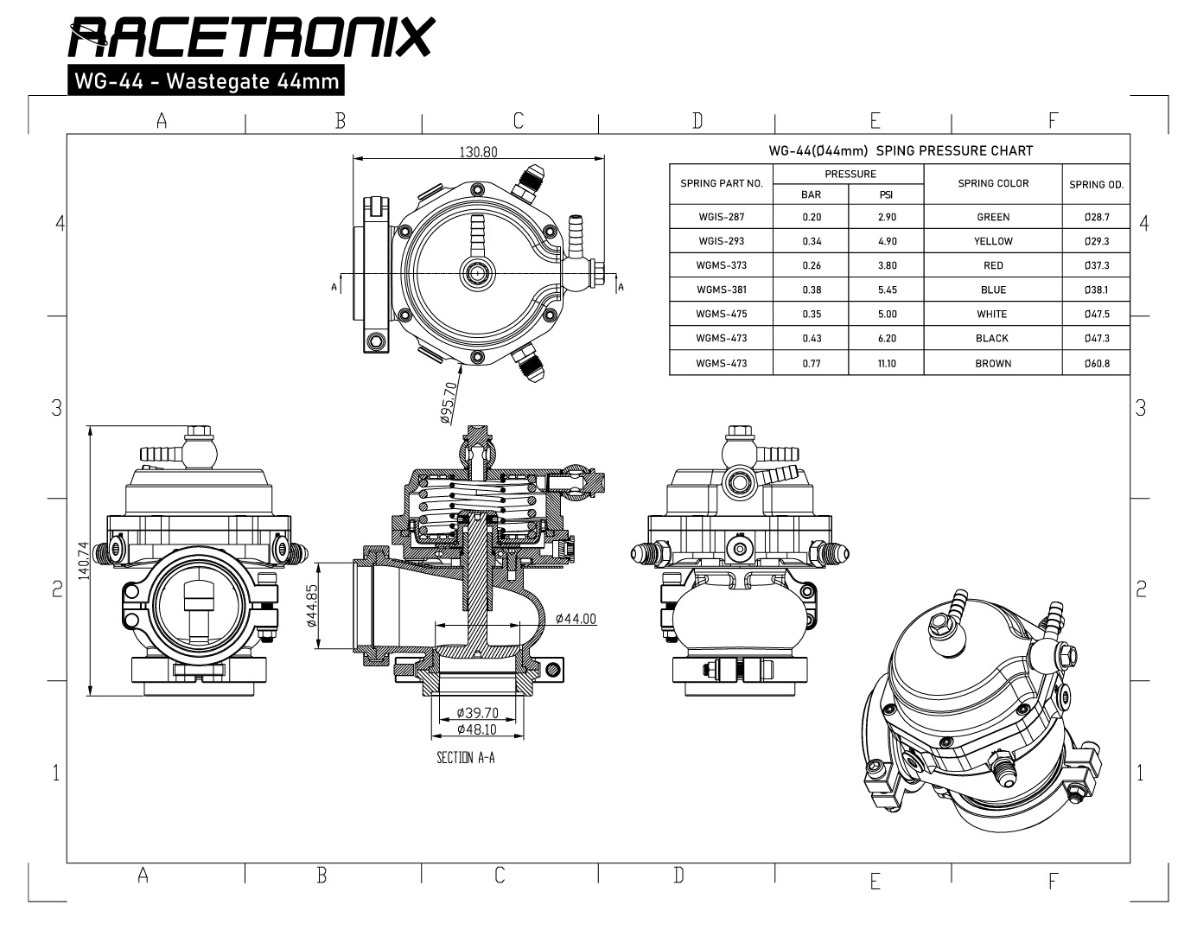
Click the drawing to enlarge. Dimensions in millimeters.
Specifications
| Part number | WG-44-0 |
| Valve size | 44 mm |
| Height | 4.17" |
| Inlet flange | Fits 1-7/8" (1.875") OD tube |
| Outlet flange | Fits 1-3/4" (1.75") OD tube |
| Air ports | 3 lower, 2 top, M10x1.0 |
| Water ports | 2 x M8x1.0, -4 AN JIC male titanium fittings included |
| Valve | Inconel, coated stem |
| Valve guide and seat | Nitronic 60 stainless steel |
| Lower housing | 347 stainless steel |
| Actuator top | 6061-T6 billet aluminum, Black |
| Diaphragm | Fibrous boron silicone |
| Springs | 17-7 PH stainless steel; WGMS-381 and WGMS-473 installed |
| Flanges and clamps | 304 stainless steel, V-band |
| Top port pressure (CO2 or air) | 60 psi maximum (recommended) |
| Diaphragm (service part) | WG-DRM44 |
Frequently asked questions
Which springs do I need?
It depends on the engine, turbo and exhaust back pressure. With a boost controller, start with springs at about half to two thirds of your target boost and raise boost with the controller. Without one, choose springs for the boost you want, then check on the car.
Can I use my factory boost control solenoid?
Yes. A higher-flow solenoid allows larger hose and usually gives steadier control.
Why does air come out of the discharge during a boost leak test?
The valve stem has running clearance, so some air always passes during a static leak test. That is normal. Disconnect and cap the wastegate lines while you leak-test the engine.
Do I need to connect the water ports?
No. Water cooling is optional. It is worth connecting for road racing, poor engine bay airflow, rotary engines or an actuator close to hot exhaust parts.
Questions and support
Questions before you order? Email [email protected].
Racetronix provides technical support to verified customers through our support forum, not by phone or email. Please request forum access when you place your order so your account is approved before your parts arrive. The forum is moderated, open 24/7, and holds a knowledge base going back to 1999.