
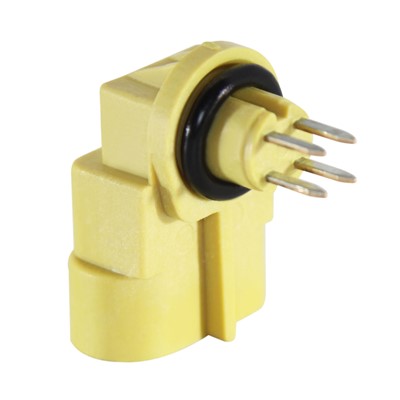


Fuel Pump Wiring Kit, C43 Corvette DCSS
Fuel Pump Wiring Kit, C43 Corvette DCSS
C4 Corvette Fuel Pump Wiring Kit — DCSS Pump Connector
A dedicated high-current pump circuit up front, and all-new wiring from the hanger to the pump. For 1984–1988 Corvette running a DCSS or 280-series lead pump.
Kit FPWK-043D | FPWH-044HD | FPAH-043 | IPH-3W12 | BCA-4W | ITWH-043
Most fuel pump "hotwire" kits stop at the tank. They run a relay and a heavy feed to the rear of the car, then hand the current back to the same factory hanger connector, the same hanger wiring and the same pump leads that were the problem in the first place. The bottleneck simply moves.
This kit is built in two halves, and it treats them differently. Forward of the hanger it adds a new circuit alongside the factory one: a 10 gauge fused feed taken straight from the battery and switched by a heavy-duty relay. The factory pump circuit stays completely intact and must remain functional, because that is what triggers the relay. Your car keeps full control of the pump, prime and oil pressure safety logic included — the factory wire simply stops carrying pump current and becomes a signal wire instead.
From the hanger back, it is a clean replacement. The output connector, the pass-through into the tank, the wiring down to the pump and the pump grounds are all supplied new and sized for a modern high-output pump. Nothing of the factory hanger wiring stays in the current path.
Why this matters
Fuel pump output is a direct function of supply voltage. A pump running a volt or more below battery voltage will not deliver its published flow, and on a boosted or heavily modified engine that shortfall shows up as a lean condition exactly when you can least afford one.
On a C4, voltage is lost in stages: long small-gauge chassis runs, the factory relay and fuse block, the hanger connector, and finally the thin pump leads inside the tank. Each stage is small on its own. Added together, and loaded with a high-output pump drawing several times what the original unit drew, they add up to real pressure loss.
- Full battery voltage at the pump terminals under load
- Factory wiring removed from the current path, front and rear
- Its own fuse, independent of the factory fuse block
- Factory pump control logic untouched — no safety circuits bypassed
What each part of the kit does
The kit is a system. Each piece exists because the piece it replaces could not carry the current, seal against fuel, or both.
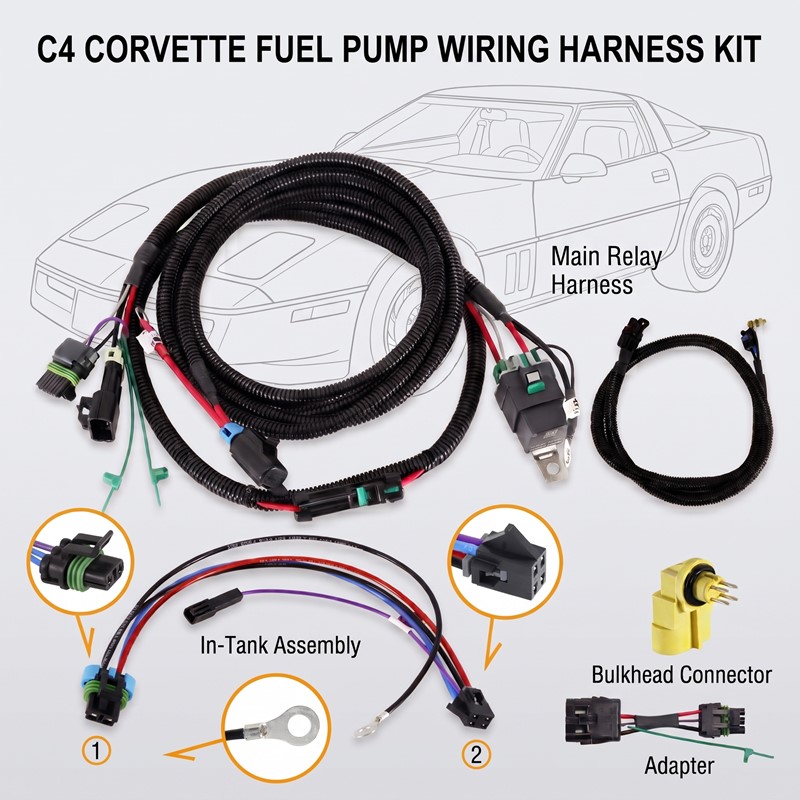
FPWH-044HD — main wiring harness
Battery to the rear of the car
Carries a 10 gauge feed from the battery ring terminal through a sealed 630-series ATC fuse holder, into a 630-series sealed relay with an integral suppression device, and on to the rear of the car in 10 gauge. The factory fuel pump feed plugs into the input side of this harness and does one job: energise the relay coil.
The output is a three-position Metri-Pack 280 connector rated for 30 amps. This is deliberately not the factory hanger connector. The original Weather Pack connector and its terminals were never intended for this kind of current, so the kit supplies its own mating half rather than plugging into one that would become the new weak point.
FPAH-043 — hanger connector adapter
Input side, 1984–1988 only
Corvettes built from 1984 to 1988 use a three-position Weather Pack connector at the hanger; 1989 and later use a four-position. Our harness is standardised on the four-position input, and this adapter converts it to three-position so the kit plugs into an early car with no modification to the vehicle connector. It is included here, and it is the only difference between this kit and the later-car version.
IPH-3W12 — intermediate pump harness
Harness output to the hanger, outside the tank
This is where the kit stops behaving like an ordinary harness. The 10 gauge feed arriving from the relay is split inside the IPH into two bonded 14 gauge conductors, both of which pass through the bulkhead and are recombined on the other side. The pair shares the load in parallel and carries 28 amps combined — this is not a step down to a single smaller wire.
It is also where the high-current pump ground is brought back into the circuit. The ground ring terminal on top of the hanger connects into the IPH, where it is bonded to a 10 gauge conductor that carries it forward to a spiked chassis ring terminal at the relay end.
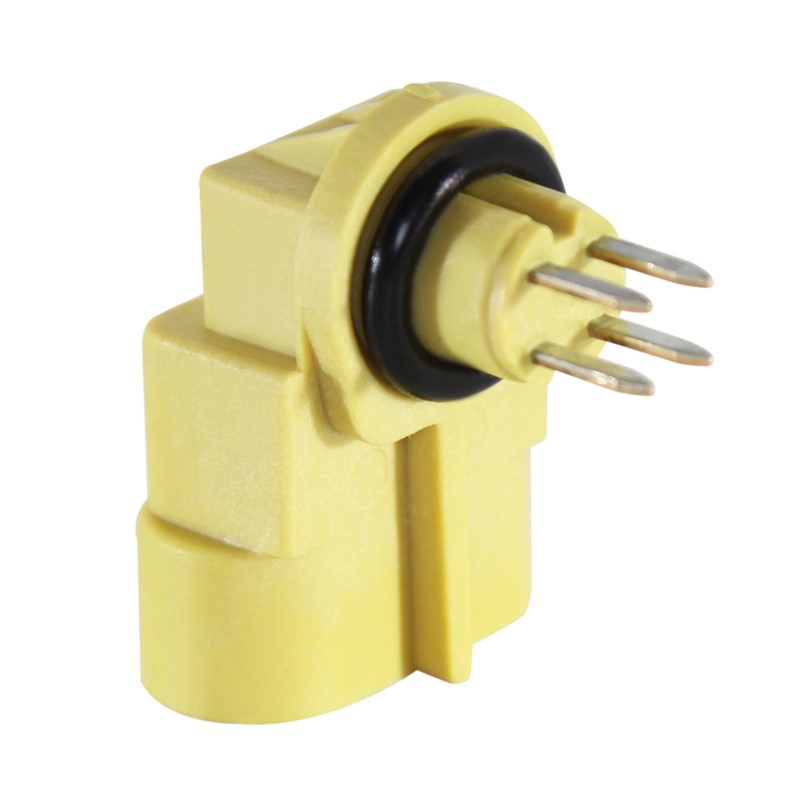
BCA-4W — fuel-safe bulkhead connector assembly
Through the hanger plate
A four-way sealed bulkhead that carries both positive conductors, the low-current ground and the level sender signal through the hanger plate. It seals on the liquid side and the vapour side, so the pass-through is fuel and vapour tight without asking the factory connector to pass current it was never built for.
ITWH-043 — in-tank pump harness, DCSS
Bulkhead to the pump, inside the tank
This is the part that distinguishes the D kit. It terminates in a 280-series connector that mates directly with the flying leads on a DCSS pump, so the pump plugs straight in with nothing cut, spliced or soldered inside the tank. It picks up the two positive conductors on the inside of the bulkhead and recombines them into a single feed at the pump, and a separate heavy-gauge conductor runs from the pump connector to a ring terminal on the brass bolt through the hanger, forming the high-current ground return.
Built with PTFE or ETFE insulated wire rated to 600 volts — the same wire we use in every in-tank harness we make. It will not swell, harden or leach in gasoline, ethanol blends or methanol. It also carries a flying lead for the fuel level sender, so your factory sender wire joins our harness and its signal passes through the bulkhead to the gauge unchanged.
Fuses, labels and connectors
Supplied in the accessory bag
We no longer ship the fuse holder with a rating printed on it. Customers run a wide range of pumps, and a fixed label on the holder encourages the wrong fuse to be fitted. Instead the kit includes both 25 amp and 30 amp ATC fuses with spares, plus labels so you can mark the holder to match the fuse you actually fit. Insulated butt connectors are included for the small number of joints made to vehicle wiring.
Two grounds, not one
Grounding is where most pump upgrades quietly fail. A pump that cannot get its current back to the chassis is just as starved as one that cannot get current in, and the factory hanger ground path was sized for the original pump.
This kit runs two grounds in parallel, each doing a different job:
| High-current ground | Heavy-gauge PTFE conductor from the pump connector to a ring terminal on the brass bolt through the hanger. On top of the hanger a second ring terminal picks it up into the IPH, where it bonds to a 10 gauge conductor running forward to a spiked chassis ring terminal at the relay. |
|---|---|
| Low-current ground | Carried through the BCA-4W bulkhead alongside the positive conductors and the sender signal, in parallel with the high-current path. |
Follow the grounding instructions exactly. An incomplete ground, or an assumption that the factory ground path still applies, is the single most common cause of a kit that does not perform as expected.
The current path, end to end
| Battery ? fuse ? relay | 10 gauge, sealed 630-series ATC fuse holder, 25A or 30A fuse to suit the pump |
|---|---|
| Relay | 630-series sealed relay, triggered by the factory pump feed |
| Relay ? hanger | 10 gauge to a three-position Metri-Pack 280 output, rated 30A |
| Hanger, outside | IPH-3W12 — 10 gauge split into two bonded 14 gauge conductors, 28A combined; high-current ground bonded and carried forward |
| Through the plate | BCA-4W sealed four-way bulkhead, plus the brass bolt for the high-current ground |
| Hanger, inside | ITWH-043 — conductors recombined, heavy-gauge ground to the brass bolt, sender pass-through |
| Pump | 280-series connector onto the pump's flying leads, no splices, no solder |
Engineering specifications
| Relay | 630-series, sealed, integral EMI suppression |
|---|---|
| Relay socket | 630-series, push-to-seat |
| Fuse holder | 630-series ATC, sealed, supplied unlabelled |
| Fuses supplied | 25A and 30A ATC, plus spares and rating labels |
| Main power feed | 10 gauge — battery ring terminal to fuse holder, fuse holder to relay, relay to harness output |
| Bulkhead pass-through | Two 14 gauge conductors in parallel, 28A combined |
| Ground return | 10 gauge to the hanger, heavy-gauge PTFE inside the tank |
| Harness output connector | Metri-Pack 280, three-position, 30A rated |
| Pump connector | Metri-Pack 280 series, for DCSS-style pump leads |
| In-tank wire | PTFE / ETFE insulated, 600V rated, submersible |
| Bulkhead | BCA-4W, four-way, sealed liquid and vapour side |
| Splices | Ultrasonically welded — no solder joints |
Pump compatibility
This kit is for cars running an aftermarket high-output pump. It is not compatible with the factory Delphi pump, which uses a unique 150-series Metri-Pack connector limited to 16 gauge wire — and there would be no benefit in hotwiring a stock pump in any case.
The D in the part number identifies the in-tank pump connector. This kit is supplied with a 280-series connector, which mates with pumps whose leads come off the top of the pump head:
- Walbro 450 and 525 DCSS dual-turbine pumps
- Any other pump fitted with 280-series flying leads
It is not the right kit for pumps using the standard Sumitomo / Tyco open-style connector — Walbro 255 and 350 series, and the Racetronix RXP range. Those take FPWK-043W instead, which is this same kit supplied with a different in-tank harness.
Identifying a 280-series pump lead. The connector body on the pump's leads looks female, but the terminals inside it are male — with Delphi connectors the gender is always named for the terminal, not the body. If your pump has two short leads ending in a two-way connector, this is the kit you want, regardless of how the body looks.
Not sure which kit your pump takes? Email [email protected] before ordering and we will confirm it.
Fitment
Vehicle: 1984–1988 Chevrolet Corvette. These years use the three-position Weather Pack hanger connector, and the required adapter is included in this kit.
1989–1996 cars: These use the four-position hanger connector and do not need the adapter — order FPWK-044D (DCSS) or FPWK-044W (RXP).
Installation notes
- The fuel pump hanger must come out to install the bulkhead connector, the ground bolt and the in-tank harness. Tank lowering, hanger removal and fuel pressure relief are outside the scope of our instructions — follow the factory service manual or an equivalent repair manual for your car.
- The bulkhead connector and the ground bolt install through the hanger plate and require drilling. Hole sizes and locations are given in the installation manual.
- Fit the fuse that matches your pump, and apply the corresponding label to the fuse holder so the next person to open it knows what is in there.
- Work with the battery disconnected and observe normal fuel system safety precautions.
Frequently asked questions
Does my factory fuel pump circuit still need to work?
Yes, and that is by design. The factory circuit triggers our relay, so the factory fuse, relay and wiring must all be functional. If your car has an existing fault in that circuit, fix it first — this kit will not mask it.
How do I know whether I need the D or the W kit?
It depends on the connector on your pump, not on the car. If the pump has two short leads coming off the pump head into a two-way connector, you want this kit. If it has the standard open-style connector on the pump body, you want FPWK-043W.
Can I use this with the factory pump?
No. The factory Delphi pump uses a unique 150-series Metri-Pack connector that will only accept 16 gauge wire, and our in-tank harness is not built to terminate into it. A stock pump does not draw enough current to benefit from the upgrade anyway.
Why replace the in-tank wiring as well? Isn't the relay the important part?
The relay fixes the front half of the problem. The hanger connector and the wiring from it down to the pump are sized for the original pump and become the new bottleneck the moment the front half is fixed. Doing both is what makes the voltage gain reach the pump terminals.
Does the fuel level gauge still work?
Yes. The in-tank harness has a flying lead for your factory sender wire, and the signal passes through the bulkhead to the factory circuit unchanged.
Which fuse should I use?
It depends on the pump you are running. Both 25 amp and 30 amp fuses are supplied with spares, and the manual tells you which to fit. Label the holder to match.
I have a question before I order.
Email [email protected]. Our support forum is reserved for customers and access is granted after purchase.
Warranty and technical support
Racetronix products are warranted against defects in materials and workmanship. Technical support is provided to verified customers through our support forum only — we do not provide technical support by phone or email.
Request forum access when you place your order so your account is approved before your parts arrive. Presale questions go to [email protected].
- Available around the clock, so you are not waiting on business hours
- Moderated and approval-only — no spam, no noise
- A searchable knowledge base of real installations going back to 1999
- Post photos and files without the size limits email imposes
- Answers stay online, so the next person with your question finds it too
Designed, built and tested by Racetronix in Markham, Ontario, Canada.